Handicraft
CERAMICS
Orvieto and ceramics
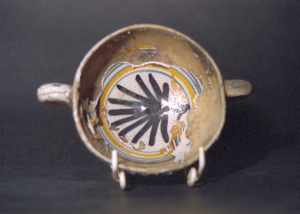
Walking around the old town, from Via Cavour to Via del Duomo, where you can find most of the shops and ceramics shops: in the Città della Rupe the colours and decorations of Orvieto ceramics have deep roots with references to Lombardy and Frankish metalware.
A visit to the nearby Medieval and Renaissance Maiolica Museum will help you decide which style and period to choose for your souvenirs. The large kiln inside, the only fifteenth century kiln left in Italy, gave shape to a rich and varied series of ceramic objects that can still be seen here.
Before leaving Orvieto, also famous for its processing of gold and wood (there are also some important premises decorated by the workshops), take the opportunity to stop for something to eat; the average quality of the food here is excellent. You cannot miss the homemade pasta, the palomba alla leccarda (squab), typical of this area, as well as venison and truffles. A cup of coffee and then continue along the SS448, where the view of Lake Corbara alone is worth the trip: take the E45 to Deruta, an open-air factory.
Deruta, a factory in the open
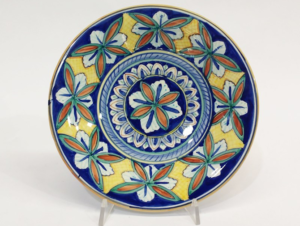
Everywhere there are shops, factories and Deruta pottery schools. The best place to try a "workshop" experience and become an "apprentice ceramist" for just a day: working with the potter's wheel or with clay and seeing your ideas take shape is really rewarding. If you are hunting for tradition: jars, terracotta pots in which oil was stored or "scine", basins where laundry was washed with ashes. But also a number of conventional and unconventional objects, all strictly hand decorated.
Many artists from Deruta have their artworks exhibited at the Louvre and other great museums around the world: for a trip between the modern and the ancient, do not miss a visit to the Fondazione Moretti and the adjacent Regional Ceramics Museum, a treasure trove like the floor of the Church of San Francesco and the votive tiles near the Sanctuary of Madonna dei Bagni. If you still have time, the best way to finish off the tour is in Ripabianca, the terracotta town, located at short distance from Deruta.
Many artists from Deruta have their artworks exhibited at the Louvre and other great museums around the world: for a trip between the modern and the ancient, do not miss a visit to the Fondazione Moretti and the adjacent Regional Ceramics Museum, a treasure trove like the floor of the Church of San Francesco and the votive tiles near the Sanctuary of Madonna dei Bagni. If you still have time, the best way to finish off the tour is in Ripabianca, the terracotta town, located at short distance from Deruta.
Goldsmiths and Glassmakers
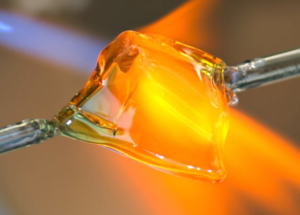
Working with gold and making glass in Umbria have roots that are older than you might imagine. In Orvieto there is an abundance of proof of the work done by master Etruscan goldsmiths and the Museo Faina in Orvieto has an entire section devoted to this ancient craft. Here you can see just how delicate and beautiful the pieces they made were. Today, Perugia, Torgiano, Spoleto, Orvieto and Terni are the most important centers of this ancient craft. Here, the master goldsmiths have given life to a new style, but still use the ancient Etruscan technique of granulation, which consists in soldering tiny grains of gold, properly fused, onto a sheet of the same material which is then shaped to create the piece of jewellery desired. When you are in Torgiano, you'll notice the different colour of the products made here with gold of a higher quality.
If you love quality products and are looking for truly exclusive items, then go find out more about the local production of glass in Piegaro. The art of glassmaking here dates to the XIV century when the local master glassmakers made the windows for the Cathedral in Orvieto, and it is the oldest in all of Umbria. We recommend a visit to this fortified village. In the heart of it, along Via Garibaldi, you can see the old glass workshop which, since 2009, is home to the Glass Museum. Here you'll be able to learn more about this ancient tradition and current production methods. If you're here in autumn, along the road that goes into town, you'll probably come across many locals picking olives. Piegaro is located along the Extra-virgin Olive Oil DOP Route, one of the many excellences of Umbrian gastronomy.
You can also find the art of glassmaking in Perugia, in the historic Moretti-Caselli workshop where they have been painting glass since 1859. The tradition and techniques of this family are still alive today. Located in front of the great Rocca Paolina fortress, on via Fatebenefratelli, you can visit the lab-cum-museum. Of special interest are the portraits they have made, which seem painted with oils, but with a light and brilliance that you would never see on a canvas.
Weaving mills and stained glass making
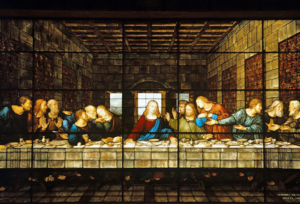
Examples of manufacturing excellence in cloth and glass can be found all over Italy, but every region maintains a particular feature which makes the local ones unique and distinctive. In this suggested itinerary, we want to help you discover the unique characteristics which distinguish these crafts in Umbria.
Ti porteremo nel cuore di Perugia, dove all’ombra delle mura etrusche alcuni artigiani conservano e tramandano antiche tradizioni.Vicino Piazza Partigiani visita lo Studio Moretti Caselli, Museo-laboratorio di vetrate artistiche ed entra in contatto con una delle più antiche famiglie di mastri vetrai d’Italia.
Il museo-laboratorio si trova in una residenza quattrocentesca appartenuta alla famiglia dei nobili Baglioni. Francesco Moretti iniziò la sua attività nel 1859 e da allora la tradizione della lavorazione delle vetrate artistiche si è trasmessa da padre in figlio, arricchendosi degli studi e dei talenti di ogni componente della famiglia. Entrando nel laboratorio osserva le bellissime opere su vetro e poni particolare attenzione agli strumenti, alcuni ancora in uso, progettati e fatti realizzare artigianalmente dallo stesso Moretti, come il forno alimentato a legna per la cottura del vetro dipinto, gli strumenti per la manifattura delle trafile e quelli per la fusione del piombo. (per informazioni sugli orari di apertura al pubblico visita il sito web www.studiomoretticaselli.it)
Leaving the workshop, cross the city center and head towards the Elce neighbourhood. Walk up via Tiberio Bernardi, a crossing of via Innamorati: in a few minutes you will see the church of San Francesco alle Donne, location of the Museo Atelier "Giuditta Brozzetti", famous for the production of hand-woven artistic textiles. The history of the atelier goes back to the beginning of the 20th century, when Giuditta Brozzetti started a workshop to produce high quality artistic textiles. Since then it has passed down through four generations. The workshop is one of the few remaining ateliers in Italy that continues to hand-weave on "Jacquard" looms.
The museum's location will astonish you: dating back to 1212, it is Perugia's oldest Franciscan church. In 1252, the convent was ceded by the Franciscans to the Benedictine Monks and after this event it took the name of San Francesco alle Donne.
The pieces you will find in the museum are of incomparable beauty and mastery marked by years of work and experience: there are themed textiles inspired by Etruscan fabrics and the "Tovaglie Perugine", altar cloths used in medieval churches in central Italy at the end of the 12th century (the "Tovaglie Perugine" are depicted in paintings by Pietro Lorenzetti, Giotto, Ghirlandaio and Leonardo da Vinci). One of the atelier's most important projects was the restoration of a 16th century loom which allowed the recovery of a weaving technique that had been thought lost: the "Fiamma di Perugia". For information: http://www.brozzetti.com/
Orvieto Lace
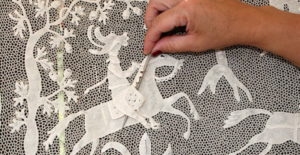
The idea for the project was launched by the Senator Count Eugenio Faina and realized by his son, Claudio, who set up a fund for a simple but remarkable work women could do at home to earn some income for themselves.
The lace is unique in its genre, both for its technique and the designs that become real works of art, like center pieces and decorative additions to clothing and household linens. The technique comprises various phases that can be done by more than one person, each one specialized in a particular phase.
The main tools are a crochet hook and very thin thread. A design is drawn on paper and then traced onto a densely woven fabric. The ornament is made based on the design and sewn onto the cloth. At the end, the base unites all the pieces: the design and the central part made up of rounds, with a netting that can be of a different shape and picots that refine the work. A detail worthy of note is the special ironing technique with starch, done with unusually shaped heated irons with rounded points which create the bas-relief effect of the design that so distinguishes Orvieto crochet lace.
Passion for this tradition remains very much alive today and the ancient art of lace making has now been enriched with new and original shapes. Experts base their work on ancient designs and have created an entirely individual style where traditional knowhow results in new creations with materials that are seemingly far from traditional.
Leather, knitwear and uncommon fabrics have become rightful members of this remarkable world of fashion and home décor, serving as decorations on shoes, wedding dresses, lamp shades, chairs and other items created for a clientele that is both refined and discerning, clients who appreciate the inestimable value of handcrafted beauty.
The master cabinetmakers
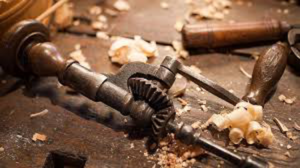
Grazie alla tradizione dei Maestri mobilieri, l’Umbria è conosciuta in Europa come un punto d’eccellenza.Se trascorri il tuo tempo libero alla ricerca di speciali pezzi d’antiquariato e i mobili in legno non possono mancare a casa tua, approfitta del tuo soggiorno in Umbria per conoscere la tradizione mobiliera.
The art of working wood has a long and honourable tradition made up of local craftsmen and itinerant artisans who spread the styles and techniques all over Umbria. One illustrious example is the carver-inlayer Antonio Bencivenni, who trained in the workshops of the Palazzo Ducal in Urbino but moved to Perugia in the late 1400s. Many of his most important pieces are to be found all over Umbria: at the Collegio del Cambio in Perugia his work is based on a design by Perugino, then there is the choir of the Cathedral of Todi and many other fine works you'll discover as you go along. He is also famous for a somewhat spirited sense of humour, as proven by the phrase De umbra asini domini nostri (or "from the shadow of our donkeys") he inscribed on one piece. The 15th century cabinet that the workshop of Giuliano da Maiano made for Guidobaldo da Montefeltro, once housed in the 14th century Palazzo Ducale of Gubbio, is now at the Metropolitan Museum in New York.
During the Renaissance, many palazzi became sumptuous homes and the furniture made for them bear witness to this. It was then that the techniques used by inlayers reached their height and examples of this art can still be seen in, for example, the decorated trunk housed in the Picture Gallery of the Gubbio City Museum and the one from the late 14th century housed in the Picture Gallery of Città di Castello.
Città di Castello is well worth a visit to learn more about the art of furniture making. The city's craftsmen are specialized in the production of stylish furniture made with recovered and seasoned blocks of solid wood. These pieces are a fine example of design and technique recognized on a European level. Every November they hold a furniture show that is entirely devoted to the tradition of carpentry in this city, as well as its more modern expressions.
Evidence of the great tradition of woodworking in Città di Castello dates to antiquity, and the collection donated in 1912 by the art and antiques dealer Elia Volpi, which today can be seen on display in the Picture Gallery of the 16th century Palazzo Vitelli alla Cannoniera, is proof of its extraordinary variety. It was in that era that the Crafts School was founded to teach artist techniques to both seasoned woodworkers and apprentices. The tradition has remained alive over the years and to safeguard both producers and customers, the trademark "Vero Mobile in Stile Altotiberino" (or Real Furniture in the Style of the Upper Tiber Valley) has recently been registered.
Fonte: Umbria Tourism